
To all the foreign engineers working in Japanese Traditional Companies (JTCs): thank you for your hard work. While your development team might be a comfortable place to be, do you ever feel isolated from the latest global tech trends?
Staying too long in the closed environment of a JTC makes you an expert on internal rules, but it carries the risk of falling behind the rest of the tech world.
This article explains how to build a new “gateway” for your career by leveraging tokyo tech meetups and english developer communities japan.
Beyond the Echo Chamber: Why You Need to Attend Tokyo Tech Meetups
Why should you go through the trouble of searching for “tokyo tech meetups” and heading out after work? It is because these events offer a chance to connect with “external interfaces” that you will never find inside your company.
Networking Outside the JTC: Finding Your Global Tribe in Japan
The internal network of a JTC is like a mainframe running on a proprietary, legacy communication protocol. You can only interact with a limited circle of people. In contrast, outside tech communities allow you to interface with diverse talent from various backgrounds and companies. You’ll find engineers from startups working with the latest stacks like React, Go, and Rust, as well as professionals from global giants like Google and AWS. Connecting with them isn’t just about networking; it’s an opportunity to broaden your scope as an engineer.
How to Find High-Quality Tech Events in Shibuya, Roppongi, and Akihabara
The Tokyo tech scene is specialized by area:
- Shibuya: Home to many Web-based startups and SaaS companies. Expect frequent events focused on front-end (React/Vue) and modern web services.
- Roppongi: A hub for foreign tech firms and fintech companies, tending toward more business-oriented, high-skill meetups.
- Akihabara: Roots in hardware, IoT, embedded systems, and passionate open-source communities.
A pro tip for identifying high-quality events on platforms like Meetup.com is to check the technical level of past “LTs” (Lightning Talks) and the diversity of the participants.
Top Picks: The Best English Developer Communities Japan Has Today
Here is a guide on where to “connect” when looking for english developer communities japan.
Code Chrysalis, Le Wagon, and the Power of Expat Tech Hubs
Coding bootcamps like Code Chrysalis and Le Wagon are more than just schools. With bases in Roppongi and Meguro, they function as powerful tech hubs for expats and global talent, open to the general engineering public. Participating in their English panel discussions or hackathons is an efficient way to meet highly motivated global engineers.
Engaging with the Best English Developer Communities Japan to Boost Your Career
For more hands-on communities, consider the following groups:
- Tokyo Tech Meetup / Dev Japan: Casual environments where hundreds of engineers gather monthly to demo apps or hold “Mokumoku-kai” (coding sessions).
- Hacker News Tokyo / Machine Learning Tokyo (MLT): Strong English-based communities focused on specific topics and high-level discussions like AI, ML, and the startup scene.
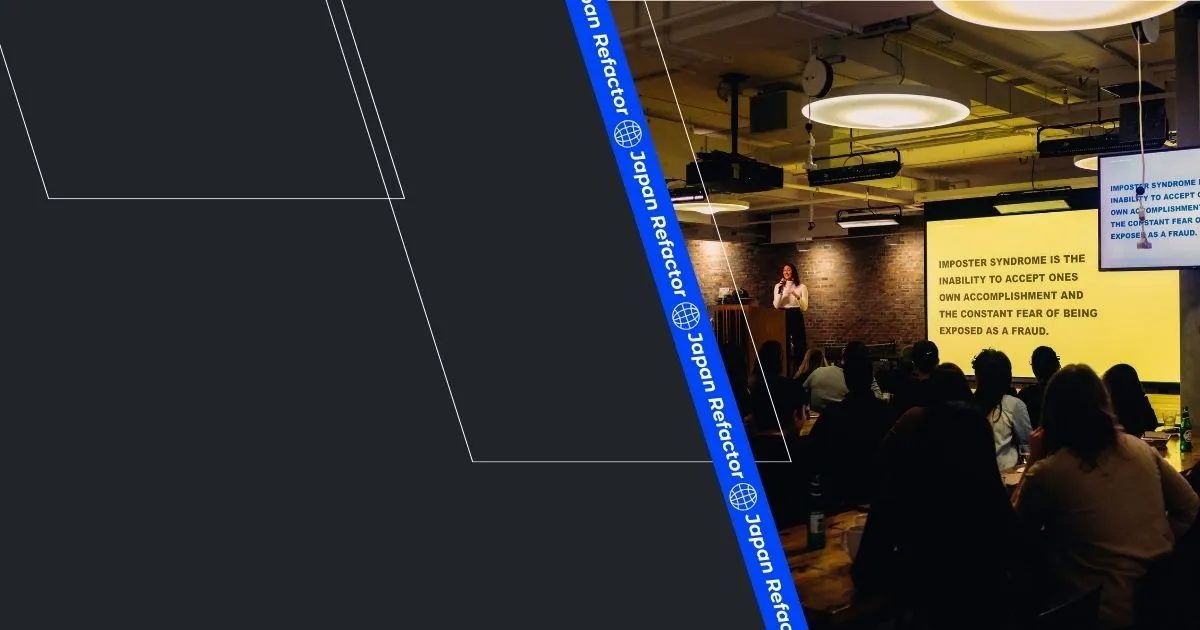
To get the most out of these English developer communities in Japan, consider sharing your own work or insights rather than just attending. Even a short 5-minute Lightning Talk can make you more visible and help more people connect with you naturally.
💡 For those who want to lower the hurdle: If you lack confidence in public speaking for tech, it’s effective to take a basic technical presentation course on a platform like Udemy beforehand. Apply this “patch” to your skills before heading to the event.
Don’t let the “Error” of worrying about your Japanese proficiency stop you.
The Soft Skills of Networking: Approaching Devs from Global Companies
In english developer communities japan, the common languages are English and code. You don’t need the complex “handshake protocol” of a JTC, such as worrying about the exact angle of your business card. Just send a technical “Ping”—ask what tech stack they are using for their current project—and they will be happy to return a response.
💡 Must-have item: Meetups drain your phone battery through LinkedIn QR exchanges and showing off demos. Bring a mobile battery to ensure you aren’t disconnected from the network at a crucial moment.
From Technical Speeches to “Niji-kai”: Mastering the Post-Meetup Socializing
The true value of tokyo tech meetups often lies not in the official presentations, but in the networking time and the “Niji-kai” (post-meetup party) at a nearby izakaya. While the main session is a broadcast, the after-party is your chance for a direct 1-on-1. This is where you can access the “hidden job market,” hearing things like, “Actually, my company is looking for a Senior Engineer…”
💡 Test your casual Japanese: Small talk in a relaxed setting can bridge the psychological gap. If you want to practice natural phrases beyond “Toriaezu nama” (I’ll start with a beer), try a test run with an italki tutor using a “meetup after-party” roleplay.
Conclusion: Secure Your Future in the English Developer Communities Japan
Your work at a JTC might function as a stable backend for your life in Japan. However, to scale your career system, connecting to the open network of english developer communities japan is essential. You might also find our “What is the Ringi System & Process?” helpful. This guide explains step-by-step how to handle decision-making and informal consensus processes within Japanese companies (“ringi” and “nemawashi”), so you can smoothly coordinate internal approvals while expanding your external network.
Action Step: Register for Your First Tokyo Tech Meetup on Meetup.com Tonight
Don’t just store this knowledge—execute it. Open Meetup.com or Connpass today. Search for “tokyo tech meetups” or your favorite languages like Python, React, or AWS.
Click the “Register” button for an event this weekend. That is your first API call to breaking out of the JTC echo chamber and accessing new career possibilities in Japan.
This article is a sub-module of Layer 1. To master the complete communication protocol or explore the entire career blueprint, choose your next destination:
🔼 Back to Layer 1: The Logic of Communication at Genba (Return to the module overview: Ringi, Nemawashi, and Genba Interaction)
🏠 Return to The Engineer’s Blueprint: Decoding Japanese Workplace Culture(Access the Master Manual including Technical Japanese, Career Strategy, and Business Etiquette)
📥 DOWNLOAD IT FOR FREE