
Starting a new life in Japan, you likely have your latest dev tools ready and are set to contribute to high-level technical projects. Your career is off to a smooth start. However, as we explored in our comprehensive banking and credit card guide, many talented foreign engineers soon encounter an irrational “design flaw” in their daily life: the credit card wall.
It is a frustrating paradox. Why is it that a professional responsible for critical systems at a stable JTC (Japanese Traditional Company) gets flagged by a simple screening process despite a high income?
To solve this, we need to go a layer deeper. From the perspective of a former OBD engineer, this guide decodes the hidden “Zokusei” (Attribute) scoring logic operating behind the curtain. We will explore how to leverage your status as a JTC “Seishain” (permanent employee)—the ultimate “Security Certificate” in the eyes of Japanese banks—to finally help you pass the screening process.
✅ Approval Difficulty Matrix — Which Card Is Right for You? (2026)
| Your Situation | Recommended Card | Approval Odds | Reason |
|---|---|---|---|
| Just arrived (< 3 months) | EPOS Card | ★★★★★ | Same-day issuance at store. No CIC history required. |
| Just arrived (< 3 months) | Rakuten Card (online) | ★★★★★ | Unique algorithm. Foreigner-friendly even with zero CIC. |
| 3–6 months in Japan | Rakuten Card | ★★★★★ | Phone bill + salary deposit history starts to register. |
| 6+ months, JTC Seishain | SMBC Card NL / Amazon MC | ★★★★★ | Zokusei score peaks. Virtual card available same day. |
| High income, global history | AMEX Green | ★★★★★ | Overseas credit history considered. Income verified globally. |
| Rejected everywhere | Sony Bank WALLET (Debit) | ✅ No screening | Visa debit. No credit check. Issued with bank account. |
Not sure where to start?
Use this matrix to find your fastest path to approval based on how long you’ve been in Japan and your employment status. Each card is covered in detail below.
Why Foreign Engineers Struggle to Get Credit Cards Accepted in Japan
Even in 2026, obtaining a credit card remains a significant barrier (japan credit card acceptance 2026) for foreign engineers working in Japan. No matter how high your technical stack is, if you don’t meet the unique system requirements of Japanese financial institutions, you will likely be rejected during the screening process. Here, we examine why even elite developers fail the screening and why a local card is a functional requirement in the japan cashless society.
Rejected Despite High Income? Here’s Why Japan’s System Flags You
“My annual income exceeds 10 million yen—why can’t I even get a card with a 100,000 yen limit?” A senior engineer I once worked with on algorithm optimization held his head in his hands after receiving yet another rejection letter.
In reality, for Japanese credit card screening, a high current salary is not the most critical parameter. The system prioritizes “stability” and your “Credit History Log” within Japan. When you first arrive in Japan, you typically have no domestic credit history. Even if you have a brilliant track record in your home country and successfully navigated “Software Engineer Salary Japan 2026” for a high-paying role, the system flags you as “High Risk due to Missing Data.”
This is driven by two core variables the system checks: your CIC (Credit Information Center) record—Japan’s primary credit bureau—and your Zokusei score, which weights factors like employment type, company size, and years of residence. Even a 10M+ yen salary cannot override a blank CIC log. To the algorithm, no data and bad data are indistinguishable.
Japan Cashless Society: Why You Need a Locally Issued Card
Many engineers think, “If I can’t get a local card, I’ll just use the ones from my home country.” However, in the current japan cashless society, there are many instances where authentication only passes for cards issued within Japan.
Crucial infrastructure payments—such as apartment rental guarantee companies, budget SIM cards, internet contracts, and certain domestic apps—often demand a Japanese credit card. Furthermore, to optimize your cost of living using local point ecosystems and navigating “Japan Income Tax & Health Insurance 2026” benefits like Furusato Nozei (tax-deductible donations to municipalities), a domestic card is an essential component of the system.
Leveraging Your JTC “Seishain” Status to Pass the Screening Process
The ultimate hack to bypass this firewall is to maximize the environment of your “JTC” (Japanese Traditional Company). Your status as a Seishain (permanent employee) at a JTC acts like a “Security Certificate,” providing absolute trust to Japanese banks.
What is “Zokusei”? Why Corporate Engineers Have an Advantage
The core of Japan’s screening system uses a unique scoring logic called “Zokusei.” This involves assigning scores to variables such as age, company size, employment type, and years of service to quantify an individual’s “trustworthiness.”
Being a Seishain at a JTC significantly boosts this score. If you work for a major automaker or a large-scale SIer (System Integrator), the company’s stability is added directly to your personal score. Since the system prefers “stable giants” over startups, foreign engineers should fully utilize these JTC permissions.
The “6-Month Rule”: Timing Your Application to Minimize Rejection Risk
As with many things in Japan, timing is important. Applying immediately after arrival or starting a job often triggers a flag for “Potential Flight Risk,” causing the error rate to spike.
The best practice in the industry is to wait 6 months after joining your company. By consistently paying rent and phone bills and having your salary deposited into a Japanese bank account for half a year, you accumulate a healthy “Payment Log” in the system. Applying after this data is stored makes it much easier to meet the criteria for japan credit card acceptance 2026.
Best Credit Cards for Foreigners in Japan: Top Picks for 2026
Even with a high Zokusei score and perfect timing, it is not recommended to jump straight into “High Status” cards (like Platinum) that require high threshold values. Your priority should be using credit cards accepted in Japan that have lower entry barriers to establish your track record.
Finding the Best Cheap Credit Card Near Tokyo with No Annual Fee
For foreign engineers newly relocated to Tokyo or nearby hubs (Kanagawa, Saitama, Chiba), finding a cheap credit card near Tokyo with zero annual fees and high approval odds is the top priority. Local issuers like Rakuten and EPOS offer no-annual-fee options with high approval rates for foreigners, allowing you to build credit history while earning rewards on everyday spending.
Quick Comparison: Best Credit Cards for Foreigners in Japan (2026)
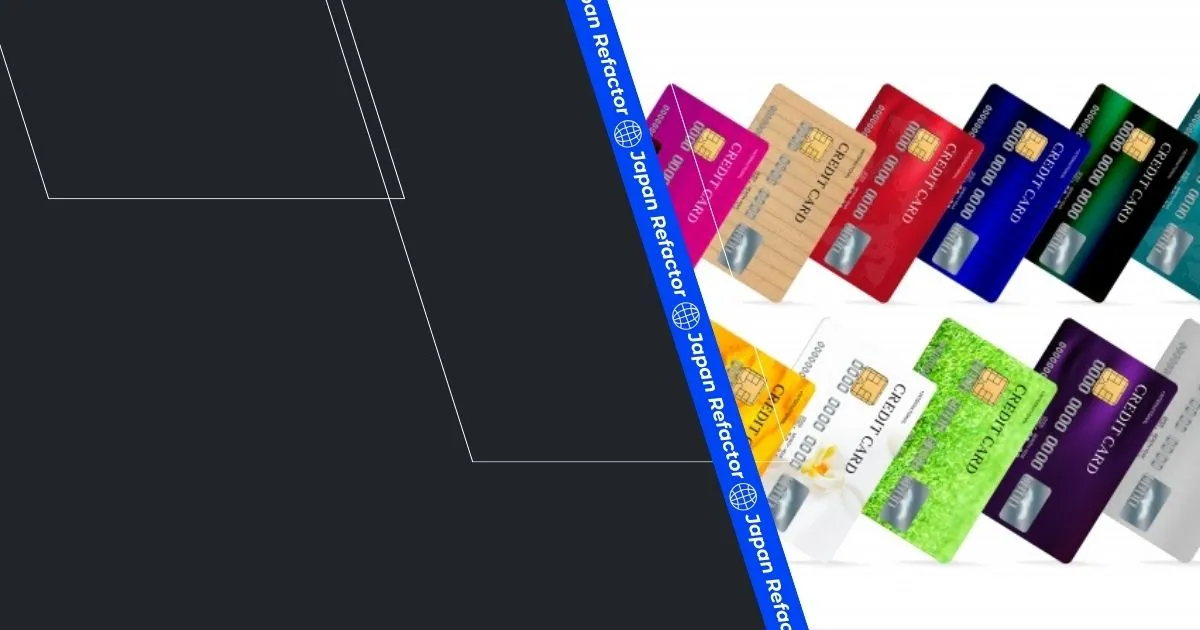
Not all cards are equally foreigner-friendly. Approval odds, English support, and screening algorithms vary significantly between issuers. The table below covers the top five best credit cards in japan 2026 recommended by the expat community in Japan, ranked by ease of approval for foreign residents.
| Card | Annual Fee | Rewards | Approval | English | Recommended For |
|---|---|---|---|---|---|
Rakuten Card | Free | 1.0% | ★★★★★ | ★★★★★ | Best first card |
EPOS Card | Free | 0.5% | ★★★★★ | ★★★★★ | Same-day issuance |
SMBC Card NL | Free | 0.5–1.0% | ★★★★★ | ★★★★★ | Virtual card / NISA |
AMEX Green | ¥13,200/yr | 0.5% | ★★★★★ | ★★★★★ | Global credit history |
Amazon Mastercard | Free | 1.5–2.0% | ★★★★★ | ★★★★★ | Heavy Amazon users |
Rakuten Card vs. EPOS Card: Best First Cards for Foreigners in Japan
Among foreign engineers in Japan, the two cards with the highest success rates for a “first card” are Rakuten Card and EPOS Card.
For a full step-by-step application walkthrough, including how to avoid common form errors, see our Easy Approval Card Guide.
- Rakuten Card: Issued by the Rakuten Group, Japan’s e-commerce giant. It uses a unique screening algorithm and is known to be very accessible to foreigners with stable jobs (especially at JTCs). With no annual fee and high point returns on tech gear and daily essentials via Rakuten Ichiba, it is the undisputed choice for a first card.
- EPOS Card: Issued by the commercial facility “Marui.” It employs a generous scoring system for younger demographics and foreigners, and you can even get it issued on the same day at their stores— making it the fastest physical card option in Japan. It also provides automatic overseas travel insurance with no annual fee, a rare combination that supports an engineer’s mobile lifestyle. For foreigners who need a card immediately after arrival, EPOS is often the most reliable same-day solution.
Amazon Mastercard: Seamless Integration for Your Daily Tech Gear
Another vital option for engineers is the Amazon Mastercard. Whether it’s keyboards, high-res monitors, or networking gear, we use Amazon constantly. This card seamlessly integrates your payments into the Amazon ecosystem with high point rewards. However, since the screening can be slightly stricter than Rakuten or EPOS, it is a smart “second card” to apply for after building a 6-month history.
Mastercard Acceptance in Japan 2026: Visa vs. Mastercard for Expats
A common question among foreign developers is whether mastercard acceptance in japan 2026 is reliable compared to Visa. In 2026, both Visa and Mastercard offer near-100% acceptance across Tokyo’s transit networks, convenience stores, and online platforms. Choosing a Mastercard option like the Amazon Mastercard or Rakuten Mastercard provides seamless touch payments (Contactless) and excellent foreign exchange reliability for overseas tech subscriptions.
No Card Yet? Best Alternatives for the Japan Cashless Society
If your screening results continue to return errors, do not despair. Here are powerful alternative tools for navigating the japan cashless society without a credit card.
Sony Bank WALLET: The Global Developer’s Favorite Visa Debit
The strongest alternative is the Sony Bank WALLET. This is a Visa debit card issued automatically upon opening a Sony Bank account. Since it deducts directly from your balance, there is no credit screening involved. It is accepted anywhere Visa is, just like a credit card. Furthermore, its multi-language online banking is excellent, allowing for low-fee foreign currency transactions—a perfect tool for global engineers.
Wise (formerly TransferWise): Essential for International Salary Transfers
Finally, Wise is an essential infrastructure tool for sending salary back home or bringing funds into Japan. Legacy Japanese banking systems involve inefficient processes with high fees and poor exchange rates. Wise uses a P2P-inspired mechanism to allow transfers at the mid-market rate with minimal fees. Their debit card allows you to manage multiple currencies in one app, serving as a powerful backup until you secure a credit card.
Conclusion: Decode the Black Box
Japanese credit card screening may seem like an irrational black-box system at first. However, beneath the surface, specific scoring rules always apply.
Utilize your JTC status, wait for 6 months of “logs” to accumulate, and start building your record with expat-friendly options like Rakuten or EPOS. If you hit an error, simply re-route your strategy to debit solutions like Sony Bank or Wise.
By following these steps, you will surely master the Japanese payment infrastructure. We are rooting for your successful engineer life in Japan!
This article is a sub-module of Layer 3. To master the complete career optimization protocol or explore the entire blueprint, choose your next destination:
🔼 Back to Layer 3: Career Strategy & Hacking Seniority (Return to the module overview: Salary Negotiation, Visa Hacks, and Promotion Logic)
🏠 Return to The Engineer’s Blueprint: Decoding Japanese Workplace Culture (Access the Master Manual including Genba Communication, Tech Specs, and Business Etiquette)
📥 DOWNLOAD IT FOR FREE